


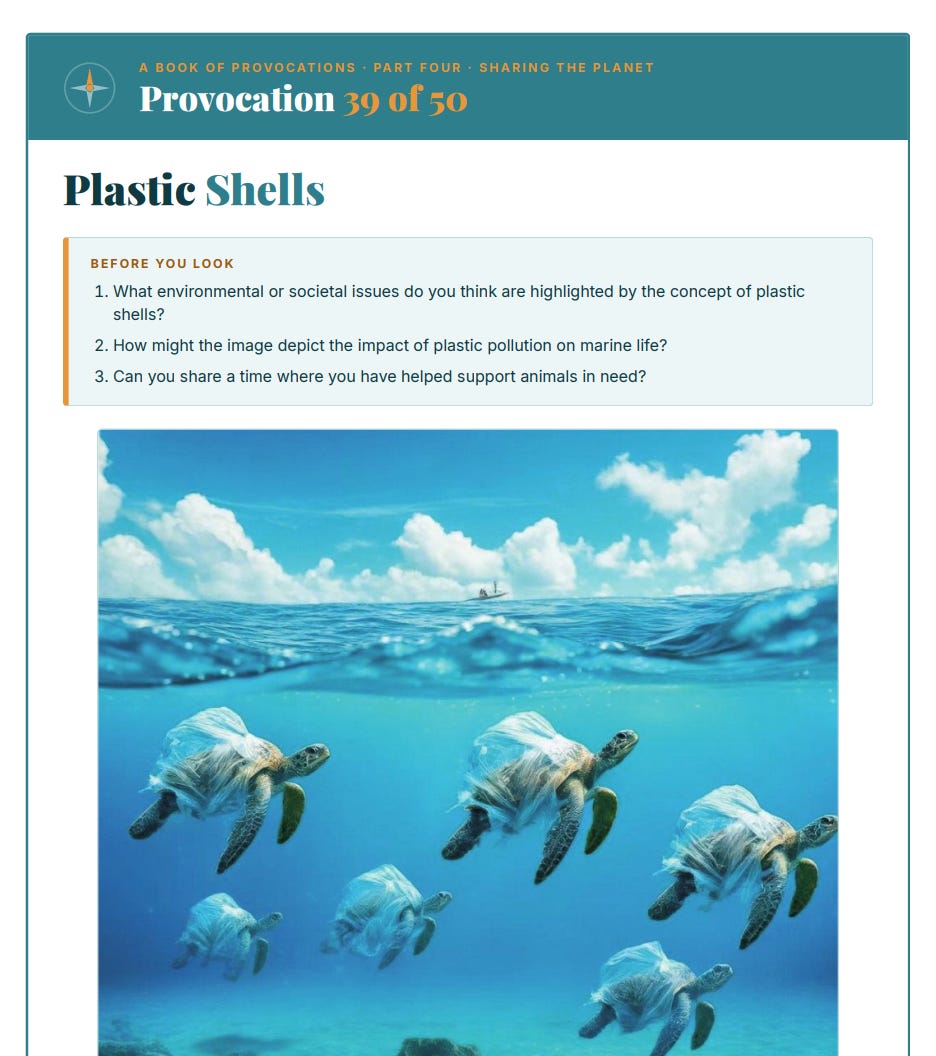
Welcome to the first Provocation of the Week.
Each week I’ll share one image from A Book of Provocations, along with the questions I’d ask before students see it. You can use it as a starter, a tutor-time discussion or a way into a new unit. It takes about five minutes to set up, and you can let the discussion run as long as it needs to.
This week’s image is from Part Four, Sharing the Planet.
Before you show the image
Give students only the title: Plastic Shells. Ask them to picture it, sketch it or describe it to a partner. Then ask:
What environmental or societal issues do you think are highlighted by the concept of plastic shells?
How might the image depict the impact of plastic pollution on marine life?
Can you share a time when you have helped support animals in need?
Now reveal it
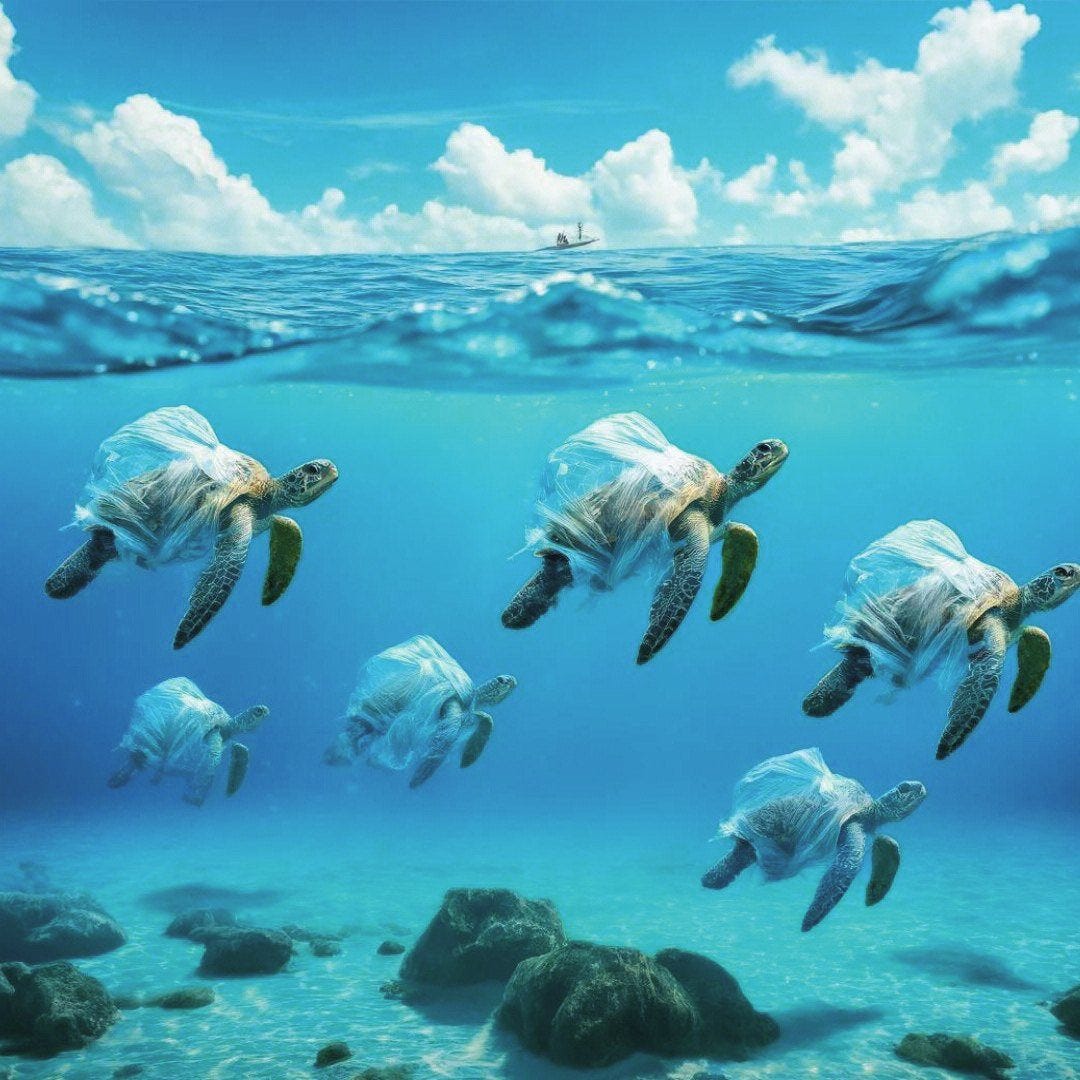
Give them a full minute of silence before anyone speaks. Then go round once: one thing you see, one thing you think, one thing you wonder. Hold back your own reading for as long as you can, because the wonder round is where the best questions come from.
Where it could go next
English: a letter to a supermarket chain, or a persuasive speech using the image as its hook
Science: why sea turtles mistake floating bags for jellyfish, and what happens next
Geography: where ocean plastic comes from and where it collects
Art: how surreal imagery makes a familiar problem feel new again
Using it for IB English B SL oral practice
If you teach English B at SL, this image doubles as practice for the individual oral. The SL oral begins with a visual stimulus linked to one of the course’s five themes: identities, experiences, human ingenuity, social organisation and sharing the planet. A Book of Provocations is organised around those same five themes, so every image in it fits the course. Plastic Shells sits under sharing the planet.
Here’s a quick way to run it as a mock:
Prepare (10 to 15 minutes): Students get the image without the questions. They make brief notes but don’t write a script.
Present (3 to 4 minutes): They describe what they see, explain how it links to the theme, and connect it to an English-speaking community they’ve studied. That could be plastic bag charges in the UK, reef protection in Australia, or a local campaign they know about.
Discuss: Use the three “before you look” questions as your follow-up prompts. Question 3 works especially well because it pushes students from describing the image to talking about their own experience.
Widen: Finish with a few minutes on a second theme. For example, ask about human ingenuity: can technology solve a problem that technology created?
The connection to an English-speaking culture is the part students most often skip, so it’s worth making it a non-negotiable from the start.
You might be interested in reading this article I previously posted.

Take it into your classroom
You can download the one-page sheet with the title, the questions and the image, or project the image on its own using “Show image”:
👉 Plastic Shells on mtfletcher.com
All 50 provocations are free to download there. The ten questions for exploration and the lesson ideas are in the book.
If you try it, reply and tell me the best question your students came up with. I’ll share a few in a future post.
Matt