


A few years ago I enrolled in a Master of Arts in Education.
I was not looking for a career change or a promotion. I was looking for answers. I had been teaching inquiry-based learning for several years, in international schools, with students from dozens of different countries and educational backgrounds, and something was not adding up.
The theory was compelling. The research was clear. Inquiry-based learning, done well, produces more motivated, more critically engaged, more independently minded learners than directed instruction. I believed that. I still believe it.
But the gap between what inquiry promised and what I was seeing in my classroom was real. Students who froze when given freedom. Students who could follow an inquiry I had designed but collapsed when asked to direct their own. Students who had never been taught how to ask a question worth pursuing, how to evaluate a source, how to build an argument from evidence rather than just reporting what they had found.
I wanted to understand why. So I went back to the research.
What the Study Found
My research focused on teachers implementing inquiry-based learning in a private international school — a school genuinely committed to inquiry as its primary pedagogical approach. I surveyed multiple educators across international schools, drawing on over a decade of experience teaching in diverse school communities around the world. I asked them about the challenges they faced, the benefits they observed, and the strategies that helped.
What they told me was largely what the existing literature predicted. Lack of time. Lack of resources. Insufficient professional development. These were the expected barriers and they were real.
But one theme emerged that I had not anticipated, and it stopped me.
Teacher after teacher, in different words and with different examples, pointed to the same underlying problem. Their students were not ready for inquiry.
Not because the students were incapable. Not because they were unwilling. But because they had arrived from educational systems where the teacher asked the questions, provided the resources, directed the thinking, and assessed the conclusions. The freedom that inquiry offered felt, to many of them, not like liberation but like being lost.
One teacher put it simply: some of my students are not yet ready to participate fully in the inquiry due to their lack of foundation knowledge and poor independent study skills.
Another described the difficulty of managing the space and autonomy given to students over long periods of time — not because the students were badly behaved, but because they genuinely did not know what to do with the freedom they were given.
Student readiness. That was the gap. And it was the gap nobody was directly addressing.
Why This Matters
Most books and courses about inquiry-based learning assume a certain baseline. They assume students who can generate meaningful questions, evaluate sources critically, collaborate productively, and reflect honestly on their own thinking. They describe what inquiry looks like when it works and offer frameworks for making it work better.
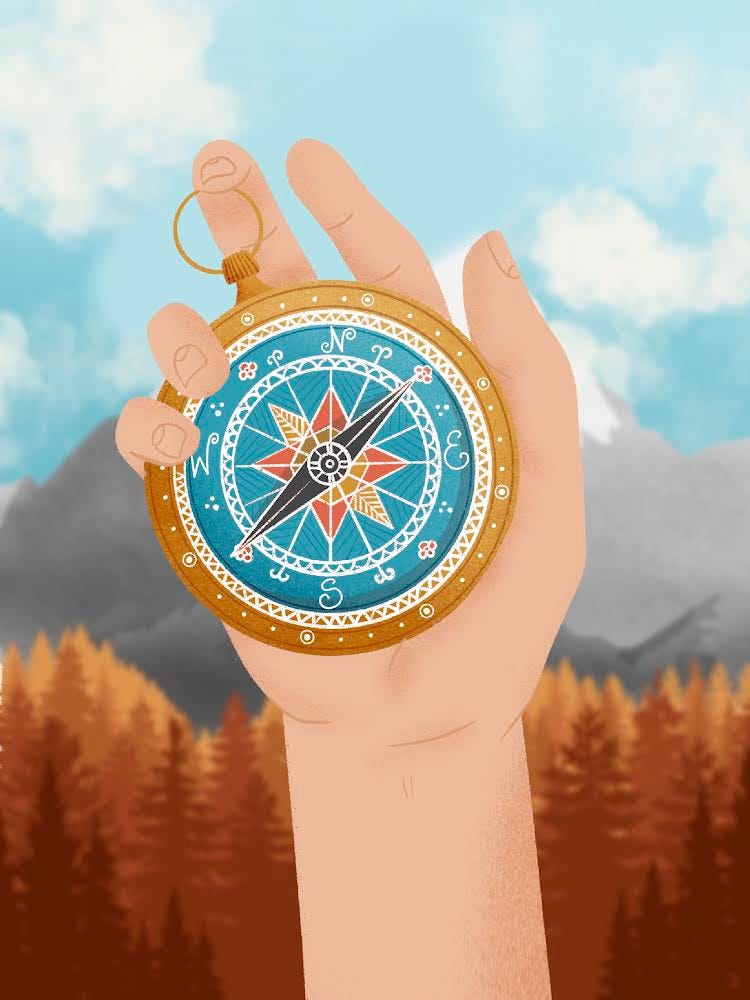
What they rarely address is the student who has never been asked to think independently before. The student who has spent their entire school career waiting for instructions. The student who, when handed the compass, does not know which way is North. That image is not accidental — it is the central metaphor of my book, The Inquiry Expedition: A Field Guide to Student Readiness, which grew directly from this research.
That student is not an edge case. In my experience, and in the experience of every teacher I spoke to in my research, that student is the majority. Particularly in schools where students arrive from diverse educational backgrounds, where some have experienced rich inquiry-centred learning and others have experienced nothing but directed instruction, the range of readiness in a single classroom can be enormous.
And yet we tend to design inquiry units as if every student arrives equally prepared.
What I Did About It
The research did not give me a complete solution. Research rarely does. But it gave me the right question to pursue.
Not: how do I implement inquiry-based learning?
But: how do I prepare students for it?
That question became the foundation of everything I have been building since. The provocations that ignite curiosity before the teaching begins. The surface to deep questioning framework that gives students the language to ask questions worth pursuing. The curiosity journals that build a daily habit of wondering. The Expedition Trail that maps where students are and where they are heading. The scaffolding strategies that support without taking over.
All of it is designed to answer the question my research identified as the most important and most overlooked in inquiry-based learning. How do we get students ready for the journey before we ask them to begin it?
That is what The Inquiry Expedition: A Field Guide to Student Readiness is about. And that is what this newsletter is about.
A Question for You
Before I go — I am genuinely curious. In your own experience, what is the biggest barrier your students face when you try to implement inquiry-based learning?
Is it the questioning? The independent research? The collaboration? The willingness to commit to a position and defend it? Something else entirely?
Hit reply and tell me. I read every response and I am always looking for what to write about next.
The Inquiry Expedition: A Field Guide to Student Readiness is coming soon. Join the waitlist at expedition.fletchucation.com.
Free resources — including the Question Starter Stems Card and Surface to Deep Transformation Worksheet — are already available in previous posts.
If this post was useful, forward it to one teacher who might need it.
Follow @fletchucation on Instagram and Threads for more.
I teach science, and am a little jaded from the 'discovery' theory. Just give kids some science-y lab equipment and they will figure out a natural principle on their own 😭
I like the guided trail.
I think the idea that students are not ready is close to my experience, but not quite. I feel like inquiry is stage 2 or 3 of learning, students must first be introduced to a concept and guided through the basics before they can explore independently.